
- June 6, 2026
- Posted by: accsolms
- Category: Uncategorized
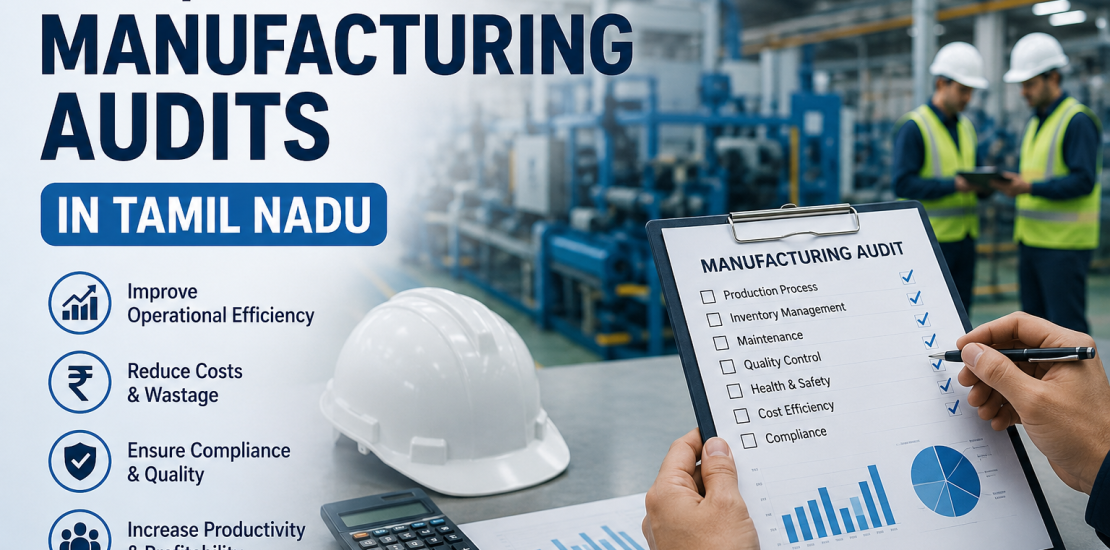
Manufacturing operational audit Tamil Nadu Nadu work in one of India’s most competitive industrial surroundings. From automobile and engineering industries to fabric, food processing, electronics, and chemical manufacturing units, businesses keep running into issues like increasing production costs, inventory losses , operational sluggishness, and profit leakage.
Most owners put their energy only on boosting sales, but they often miss the internal operational problems that really touch day to day profitability. This is exactly where a Manufacturing operational audit in Tamil Nadu can turn into a useful business uplift tool.
A manufacturing audit lets business owners catch hidden inefficiencies, fine tune processes, cut unwanted spending, and lift the whole factory output. Whether you run a small manufacturing setup or a larger industrial facility, doing audits from time to time can meaningfully improve productivity along with profits.
In this article, we will walk you through what manufacturers should know about manufacturing audits, including their benefits, the audit process and , also why these audits are becoming more and more important across Tamil Nadu.
What is a Manufacturing Operational Audit?
A Manufacturing operational audit in Tamil Nadu is basically a detailed check of how a manufacturing company runs its day-to-day operational activities , including production systems, inventory handling, procurement operations, cost controls, workforce efficiency and the overall business performance.
Unlike a financial audit which mainly zeroes in on accounting records, an operational audit looks at how smoothly the unit operates, in real life, not just what the numbers say.
The main aim is to spot or clarify things like production inefficiencies, process bottlenecks, inventory losses, excessive operating costs , resource wastage, procurement snags, quality control gaps and profit leakage areas that are easy to overlook.
After the review the audit shares practical recommendations so management can increase output and productivity while cutting down operational expenses .
Why Manufacturing Companies Need Operational Audits
Many manufacturing companies unknowingly leak a decent share of profits because of those sort of hidden operational inefficiencies that feel “normal” day to day. And it’s not always obvious until you look closer.
Some of the typical issues are like this.
**Excess inventory**
Lots of plants keep stock levels well beyond what they actually need, sort of “just in case.”
And that usually turns into several headaches, such as:
– Higher warehousing or storage costs
– Working capital gets tied up
– Material can degrade over time
– Inventory carrying costs keep climbing, even if sales stay flat
When an operational audit is done, it tends to spot inventory optimization opportunities, and that can help a lot with stock management practices, day in day out.
**Production delays**
Then there’s the production side, where unplanned downtime, machine breakdowns, weak scheduling, and process awkwardness reduce output. You see it as missed targets, but the root cause sits underneath.
An audit will typically check, and measure things like:
– Machine utilization
– Production planning
– Maintenance effectiveness
– Workforce productivity
That process enables management to raise overall production efficiency, steadily.
**Procurement inefficiencies**
Finally procurement can quietly decide how profitable manufacturing really is. Raw material purchasing matters more than most teams expect.
Audits usually review:
– Vendor selection approaches
– Purchase pricing
– Material quality
– Procurement controls
Better purchasing practices often lead to substantial cost savings, and not just small ones.
Understanding Cost Audits in Manufacturing
A Cost audit for manufacturing companies in Tamil Nadu mostly zeroes in on the production costs, making sure the resources are being used in a clever manner (not just “more”, but also right). In simple terms, Cost audits dig into a few things like raw material usage, labor costs, power and utility expenses, plus production overheads, and yep even waste generation. They also look at cost allocation methods, because how costs are divided can change the whole picture.
The core aim is to see if the manufacturing costs are actually reasonable, and to spot chances for cost reduction, before the numbers quietly get worse. For companies dealing with profit margins that are shrinking, this kind of audit can uncover hidden expenses that hit profitability ,almost instantly.
Key Areas Covered in a Manufacturing Operational Audit
A solid operational audit usually touches several parts inside a manufacturing organization, not just one silo.
- Production Process Review
Auditors look at the production workflow, capacity utilization, cycle times, process efficiency, equipment effectiveness. The point is to find ways to boost output without pushing costs up too much, or by a sneaky amount that nobody noticed.
- Inventory Management Assessment
Inventory is often one of the biggest investments in manufacturing businesses, so the audit checks raw materials, work in progress inventory, finished goods inventory, inventory turnover ratios, and stock reconciliation procedures. When inventory is managed properly, cash flow improves, and waste can drop ,quietly.
- Procurement and Vendor Evaluation
Procurement audits focus on vendor performance, purchase procedures, price competitiveness, material quality standards, and supplier dependency risks. When vendor management gets tighter, costs usually fall and material quality becomes more consistent.
- Workforce Productivity Analysis
Employee productivity matters more than people think. Auditors evaluate workforce utilization, shift efficiency, labor productivity, overtime management, and training effectiveness. This helps management push workforce performance up, while still controlling labor costs ,at the same time.
- Cost Control Systems
A cost audit for manufacturing companies in Tamil Nadu also touches cost control mechanisms that are already in place. The audit checks things like budget controls , expense monitoring , variance analysis , and department-wise cost tracking. When these systems run well, businesses can keep profit margins healthier.
Benefits of Manufacturing Operational Audits
Improved Profitability
One of the biggest wins with a Manufacturing operational audit in Tamil Nadu is improved profitability. Even small operational tweaks can produce meaningful annual savings , mostly through reduced wastage, lower procurement costs, better inventory discipline, and improved production efficiency.
Better Resource Utilization
Audits help organizations squeeze out the best use of machines, labor, raw materials, factory space, and working capital. When resources are handled efficiently, day to day operations feel smoother, and performance tends to strengthen.
Stronger Decision Making
Audit results give management clearer operational data. This then supports better strategic planning , smarter investment choices, improved budgeting, stronger operational control, and a more stable way of managing day-by-day activities.
Enhanced Operational Efficiency
Operational audits can spot bottlenecks that quietly slow productivity. After bottlenecks are identified, businesses can apply targeted improvements to simplify workflows , and improve efficiency without guess work.
Reduced Operational Risks
Manufacturing audits also help reveal compliance gaps, process weaknesses, internal control issues, and other operational risks. Catching these early reduces the likelihood of expensive disruptions, before they grow into something bigger.
Signs Your Manufacturing Business Needs an Audit
A lot of manufacturers tend to wait until problems turn into something serious before they even think about doing an audit. But still, businesses should really keep an eye on an audit, when they start seeing things like: profit margins that keep dropping , production costs that are climbing, inventory that suddenly piles up more than normal, delays showing up in production runs, customer complaints that start increasing, cash flow that feels tight , high levels of material wastage, operational expenses that appear without a clear reason, and all these signs usually point to hidden inefficiencies that need looking into properly.
Manufacturing Audits and Industry 4.0
Tamil Nadu manufacturing is moving fast , with more digital tools and automation being added across plants. In today’s operational audit work, teams don’t just check paper records ,they often judge things like data accuracy. Because most manufacturers lean heavily on ERP systems and digital reporting tools, auditors typically verify data reliability, reporting accuracy, and whether system controls are working as intended. At the same time, they also review automation effectiveness, since automation investments should bring measurable business value, not just “technology for technology sake”. Auditors look into equipment utilization, process automation efficiency, and return on investment. Modern audits also examine digital process controls ,basically how well businesses use technology to monitor, control and also enhance daily operations.
The Manufacturing Audit Process
A professional audit usually goes in a fairly consistent flow, even if details vary by company size or complexity.
Step 1: Initial Assessment
The audit team starts by collecting background information on business operations, production processes, organizational structure, and key performance indicators ,sometimes KPIs are listed in spreadsheets, sometimes in dashboards.
Step 2: Data Collection
Then they gather relevant operational data such as production records, inventory reports, procurement data, cost reports, and quality records, all of it should match across sources if controls are good.
Step 3: Process Evaluation
Next, each operational area gets analyzed to spot strengths, weaknesses, and practical improvement opportunities.
Step 4: Gap Analysis
Auditors compare how things are being done now versus industry best practices, this is where performance gaps become clearer.
Step 5: Recommendations
Finally, the audit report lands with recommendations that are meant to be used ,not just read. Typical targets include efficiency, productivity, cost management, and overall profitability.
Step 6: Implementation Support
Many audit firms go a step further ,they also support management during implementation, helping translate recommendations into actions on the shop floor.
Choosing the Right Manufacturing Audit Partner
When picking an audit consultant, manufacturers should weigh a few basics ,not only the price or timelines.
Industry Experience
The consultant should have real experience working with manufacturing businesses, and not just audits in theory.
Practical Approach
Recommendations should be realistic and actionable, otherwise the effort becomes wasted.
Data-Driven Analysis
Professional auditors depend on operational data, rather than guesses or general assumptions.
Focus on Business Improvement
The goal should be improving profitability and operational efficiency, and not merely listing issues like a checklist without solutions.
Why Manufacturing Audits Are Essential in Tamil Nadu
Tamil Nadu still stands as one of India’s top manufacturing destinations. With competition increasing, input costs rising, and customer expectations getting more strict, manufacturers have to improve continuously, day after day. A Manufacturing operational audit Tamil Nadu can help businesses: improve productivity, reduce waste, strengthen operational controls, optimize inventory, boost profitability, and support sustainable growth.
Also, a Cost audit for manufacturing companies Tamil Nadu helps organizations track where money gets spent, and where costs can be reduced without harming product quality. Companies that keep evaluating operations regularly are usually better placed to compete strongly, expand steadily, and maintain healthier profit margins.