
- November 29, 2025
- Posted by: accsolms
- Category: Uncategorized
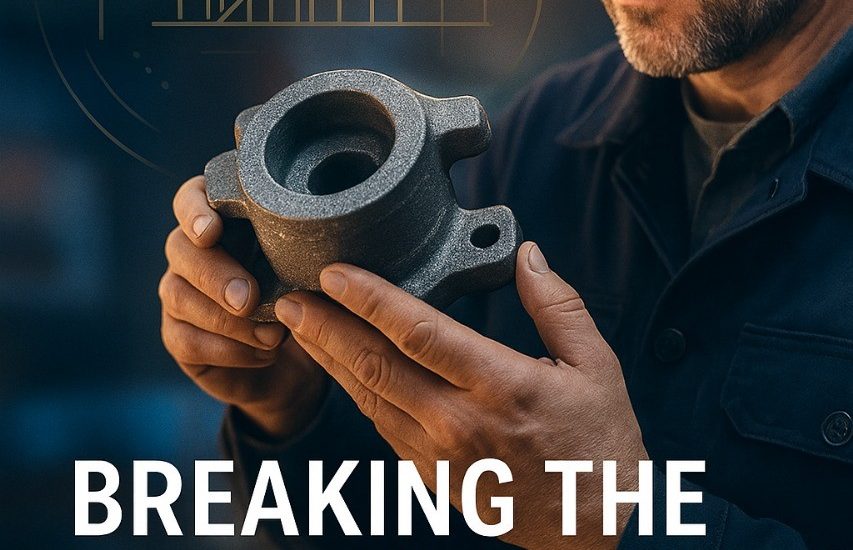
Investment in Foundry to Reduce Quality Inconsistency
Should you step into any foundry within Accsolms – Consultants In Coimbatore, Tamil Nadu, India, you are bound to hear the same familiar complaint:
“Same pattern, same furnace, same operator; the rejection rates still differ.”
The variability in casting quality thus became the dampener for profits in a hidden way. A single bad batch can wipe out one week’s profit from production; hence, it is no longer an issue of pride but survival when one talks about stabilizing casting quality.
We must focus on the reasons for inconsistent quality, the means to prevent rework from being infinite, and practical systems to help create a repeatable culture of excellence in every single foundry.
Cost of Inconsistency
Rejection is not a problem dealing with the technical aspect; rejection is a problem dealing with the financial aspect.
Every casting that is either corrected or scrapped incurs an added cost in:
- Energy used in the remelting
- Raw material and labour
- Machine hour loses in terms of production activities that could have earned money
Delayed delivery, thereby affecting customer confidence.
From Tamil Nadu, rejection rates among small and medium foundries average 6% – 12% versus world-class plants, which are below 2%.
Bridging this gap could well mean an almost instant turnaround of about 5-10% margins on profitability, which are yours for the taking, without appealing to any new customers.
Reasons for Quality Fluctuation
There are ever-present process variables, whether unmeasured or uncontrolled, that creep in despite a seasoned set of minds in foundries grappling with recurring quality problems.
1. Process Parameters Not Under Standardization
Melt temperature, pouring time, sand moisture, and inoculation weight vary with operator or shift. Such minor deviations cause significant metallurgical changes.
2. Manual Data Recording
There is some delay in taking feedback with paper logs. By the time the supervisors look through the logs, dozens of defective parts have already been produced.
3. Raw Material Mix is Uncontrolled
Different mixes of scrap batches will cause variations resulting in changes in carbon and silicon content, affecting fluidity and shrinkage majorly.
4. Environmental Factors
Humidity, sand temperature, and air pressure—all can impart subtle changes in molding strength and generation of gas; few plants are monitoring this parameter.
5. Reactive Problem-Solving
Quality teams look for defect analysis post occurrence; with no trend data to work from, every corrective action is essentially a new experiment.
For every successive shift, somebody said, “It’s just intuition-based; no information is available.”
Step 1: Digitally Capture All Process Parameters Good visibility brings quality improvements.
The automated inputs are the critical measurements of furnace temperature, melt time, sand moisture, and pour weight by sensors or hand-held loggers.
Establish a central dashboard with which to append the data with parameters of each heat for quick comparison.
Wipe out handwriting errors in the logging of any data, as typing will ensure accuracy and traceability.
Once each pour is viewed in real time, the supervisors will be able to nip deviations in the bud rather than waiting to see them come through as rejections.
Step 2: Analyze Defect Trends
- Defects tend not to occur randomly; they tend to behave in trends.
- Each rejection should be tagged to its defect type, product code, operator name, and heat number.
- Views should include trend-based reappearances, e.g., considerable porosity on humid days or a rough surface under some sand batches.
- Correlate the melt parameters with defect generation and disclose any root causes that had been obscured by manual checking.
- This process will eventually lead to a fingerprint of the process for every product, an indication of the baseline of what “good” is.
Step 3: Digitally Therapeutically Standardize Thinking
- Once the best parameters have been determined, lock them in standard operating procedures that everyone must follow.
- Display these digital SOPs near every workstation. Utilize visuals:
- good pouring height, gating that indicates good temperature.
- Use digital checklists for operators to tick off before commencing each run.
- Consistency of activity creates consistency of outcome.
Step 4: Shift from Inspection to Prevention
- The traditional quality assurance system punishes defect production—after the production occurs.
- The new paradigm is a quality assurance system that prevents defect production actively during processing.
- Live temperature-deviation alarms or sand moisture-out-of-range alarms shall intervene.
- Allow operators to stop production and fix it before defects compound.
- It would be better if we include short daily dashboards rather than those monthly rejections.
- For every minute saved in detection, countless hours on rework would be prevented.
Step 5: Using Feedback Loops to Reinforce Learning
- At the end of each shift or batch:
- Review process data against standards.
- Debate about deviations and their effects.
- Amend the SOP where necessary.
It’s only when the teams see data riding on their success that the motivation will kick in—quality will become a common objective rather than a punitive regime alone.
Step 6-Assessment of Supplier and Material Quality
- Raw material inconsistency is a silent partner for all material defects surfaced.
- Track chemical compositions of each batch of pig iron or scrap.
- Log for easy traceability from material lot to heat to product.
- Statistical analysis may rank suppliers based on consistency concerning yield too.
Purchase decisions should first be made on quality performance and only second on price; this will quickly bring down rework.
Step 7- Empower People with Clarity:
- Technology supports human beings and does not replace them.
- Operators take ownership of what happens when simple visible data shows the link between action and rejection rates.
- Make shift-wise quality dashboards visible to everyone in the shop.
- Celebrate successes with rewards for the lowest defects.
- Create a culture of transparency—”no one sees anything” with “everyone sees everything.”
- Such visibility engenders accountability, and accountability generates quality.
The Payoff of Consistency
- The steps above yield concrete results in the following terms:
- Area Typical Improvement
- Rejection rate ↓ 40-60%
- Power & materials usage ↓ 5-8%
- Rework hours ↓50%
- Customer complaint ↓70%
- Profit per ton ↑ 8-12 %
Costs start falling naturally as quality stabilizes, while firefighting stress regarding defects also goes down.
From Guesswork to Guided Decisions
Picture a live dashboard that:
- Instantaneously flags all rising trends in rejection,
- Relates the furnace temperature or operator shifts to the trend,
- Implicates which parameter needs correction next.
- The difference between managing by hindsight and by insight.
You don’t have to mention artificial intelligence to feel its effects; the system quietly learns what works best and alerts you when you drift away from it. And that quiet intelligence is the foundation of “smart foundry.”
The Accsolms – Consultants In Coimbatore, Tamil Nadu, India View
At ACCSOL Management Services, rework is not an evil cost but a symptom of their lacking clarity.
Our process frameworks for improvement reinforce foundries in:
Digitization of process and quality checkpoints
Automatic analysis of defect trends
Standardized operating template design
Real-time performance dashboarding
The end result is a prevention culture where every operator has the data for ensuring quality consistency every shift.
Conclusion
Rework is the silent ear of profit loss, but curing it lies not in magic.
It is in disciplined measurement, consistent execution, and feedback-driven learning, and those are magic’s cure today.
To summarize:
1. Digitize process data.
2. Analyze patterns and fix root causes.
3. Standardize what works best.
4. Train and empower people with visibility.
5. Continuously improve the system.
Quality does not happen by chance; it happens by design. Informational design leads the way.
Build Quality That Lasts: Rise into Partnership with Accsolms – Consultants In Coimbatore, Tamil Nadu, India
If your foundry is continually troubled by fluctuating rejection rates or defects that repeat themselves, it’s time to move from inspection to intelligence.
Through structured audits, standardized SOPs, and intelligent dashboards, we shift variation into consistency and consistency into profit. It helps Tamil Nadu’s foundries enhance process controls, reduce rework, and achieve measurable and sustainable quality.