
- November 18, 2025
- Posted by: accsolms
- Category: Uncategorized
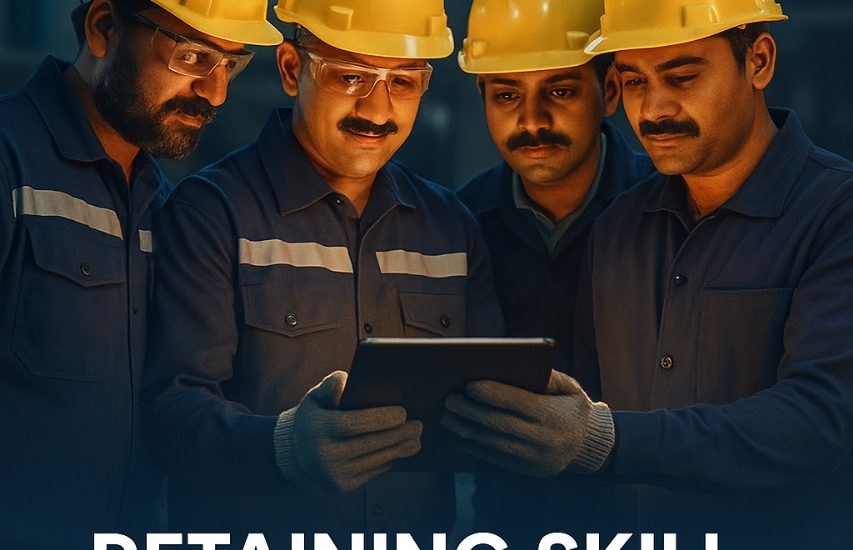
Retaining Skill, Retaining Stability: Solving Labour Challenges in Foundries
foundries in coimbatore Trichy, Erode, and Salem—molten metal isn’t the only thing under heat.Every day another type of pressure builds upon owners and supervisors: manpower.
- Finding and retaining skilled molders, core-makers, and pourers is fast becoming a tough job.
- When a trained operator exits, simultaneously exit years of experience and cumulative knowledge necessary to bring a certain stability to production rhythm.
- This greatly risks inconsistent quality, increasing downtimes, and loss in labor productivity.
- Let’s look into the reasons behind why labor instability hurts so acutely and what the foundries can do—backed by data—in actual and operational terms to create a resilient workforce system.
The People Paradox in Foundries Foundry work is hard—too hot, too much dust, and too much physical work.
Mnc foundry in Coimbatore
Young workers today prefer cleaner and more automated jobs in other industries.
The survivors of such employment conditions are very few but highly valued.
With this core challenge being
1. High Turnover:
Contract laborers shift jobs frequently for small wage differences.
2. No Skills:
The bulk of new recruits enter without a structured technical training program.
3. Person-Dependent Processes:
The loss of a competent outside employee instantly leads to a decline in quality.
4. Low Knowledge Transfer:
Information is retained in the mind and not documented in SOPs.
5. Low Safety and Low Morale:
Irregular shifts and low safety add to attrition. In essence, processes depend on people rather than the reverse.
The Hidden Cost of Labour Volatility The cost of replacing a skilled operator isn’t just in wages.
Every resignation costs in terms of weeks of lost output, more supervision, and quite a bit of rework.
Studies show that for a foundry losing just one key furnace operator every quarter, benefits include:
• 2–3 % productivity dip per year;
• High rejection rates due to inconsistent melting or pouring technique;
• Delayed deliveries eroding client trust;
• Existing personnel taking the overtime burden.
The consequential loss that sneaks below one’s threshold of perception is often more than ₹ 3 – 5 lakh per annum per position.
Step 1 – Document and Digitize Knowledge
Never mind who does the job; start by recording how it gets done.
•Maintain every activity separately, like mold preparation, melting, pouring, and fettling, and create the most detailed SOPs possible for that.
• Convert them into visual instructions with photos or videos accessible on tablets near the workstation.
• Update these whenever a process improves. This ensures knowledge stays even if people change — creating what ACCSOL calls a “memory-proof process.”
Step 2 – Create Structured Training Modules Rather than training imparted ad-hoc, bring formal training under a structured program akin to production.
• Design modular learning paths — Beginner, Intermediate, Advanced — appropriate to machine type or operation. • Imbibe digital attendance and performance tracking for continued evaluation.
• For the first thirty days, match mentors with new recruits and analyse data on a weekly basis. An ordinary training program could see early-stage rejection rates drop by as much as 30 %.
Step 3 – Measure Performance Transparently Performance improves when it’s visible.
• Track productivity per operator per shift — tons poured, cores made, rework generated.
• Display dashboards on the shop floor (simple bar charts work wonders).
• Recognize top performers publicly. Transparency creates healthy competition and pride — far more effective than warnings.
Step 4 – Build Safety and Engagement No retention plan works if workers feel unsafe or unheard.
• Conduct monthly safety audits and reward compliance.
• Rotate tasks to reduce fatigue.
• Hold brief “5-minute stand-ups” each morning to share targets and appreciate yesterday’s results. A small gesture of acknowledgement often matters more than a small raise.
Step 5 – Predict Attrition with Data Patterns precede resignations.
Simple data — absenteeism, overtime hours, rework rates — can signal burnout or disengagement.
By reviewing these weekly, supervisors can intervene early:
adjust workload, provide rest, or discuss concerns.
This predictive approach (quietly powered by data analytics) prevents surprises.
Step 6 – Stabilize Incentives Erratic incentive policies create confusion.
Build an award system that reconciles individual effort to a collective goal.
• Consider bonuses based on shifts, yields, energy efficiency, and quality, not just volumes.
• Use dashboards so employees see how their actions affect results.
• Keep payouts frequent and transparent. When pay reflects measurable performance, accountability becomes self-driven.
Step 7 – Foster Internal Growth
A clear way for further clarification is to focus on given possibilities for growth, like helper → operator → supervisor → shift foreman. Promote the movement through further training and certifying over and above time-interest.
Internal mobility indeed strengthens loyalty and dependence on scooping from outside the company.
The Human-Data Connection
Technology can’t replicate skilled hands, but certainly, it can remind, direct, support, and hold them on site
A few glimpses of digital boards:
• Shift view with star and red marks for productivity with recent rework trends.
• Pending training modules for respective associates.
• Attendance reduction early warning.
Evolving? That’s how the modern foundries of the top clusters in Tamil Nadu fluctuate.
merged into a workplace that feels personal & measurable in performance; this is therefore the synergy obtained from combining human insight with data visibility.
The Bigger Benefits
Impact Area
Typical Improvement
Labour Turnover
↓ 20-30%
Training Time
↓ 40%
Reworks due to skill error
↓ 35%
Productivity per Shift
↑ 10-15%
Safety Incidents
↓ 25%
Stability in the persons, therefore, is stable in the production.
The ACCSOL Viewpoint
The starting point, as ACCSOL Management Services holds, is process stability, starting within the stability of the people.
For this, ACCSOL’s best asset management foundry in Coimbatore consulting frameworks helps the foundries in:
• Growing their digital standard operating procedures (SOPs) library in every core operation.
• Development of training and skill tracking systems,
• Creating operator performance dashboards
• Linking human resource data-to-production KPIs for improvement judgments
End Result: An ever-growing workforce—well-trained because time sees them together.
Conclusion: From Workforce to Work System
The Tamil Nadu-based foundries know something, and that is a lack of structure.
In many hunter-gatherer areas, the knowledge is transmitted from generation to generation through tribal knowledge, with the likes of shared systems leading it to get into broader understanding.
1. Digitized knowledge.
2. Continuous learning.
3. Transparent measuring.
4. Rightly engage and reward.
5. Predict and prevent attrition.
If every worker knows what their effort has yielded, surely every shift will be more productive, leading each foundry towards greater sustainability.
Empower Your People! Strengthen Your Process—Join ACCSOL.
While you may struggle with swings in labor, an increase in training costs, or inconsistent performances, hold on for a while, and let’s construct one thing that possibly matters—the word “stability.”
ACCSOL Management Services works to reinforce the integration of training, workforce data, and operational performance with profits among manufacturers of Tamil Nadu.
Help us help you retain your skills, ensure good quality, and unlock profitability through structured process management and smart visibility.
Please connect with ACCSOL right away—because a strong process is being built by stronger people; any stronger losing streak is around victory!
That was all foreseeing the mighty views of magnetism.
Author Bio
Binsy Bose is the founder of Accsol Management Services Pvt. Ltd. (Accsolms). With over 15 years of experience, Binsy has helped manufacturers across Tamil Nadu and neighboring states identify hidden profit leaks and achieve operational excellence.
Visit us at www.accsolms.com to learn more or book a free consultation today.